380 Grams
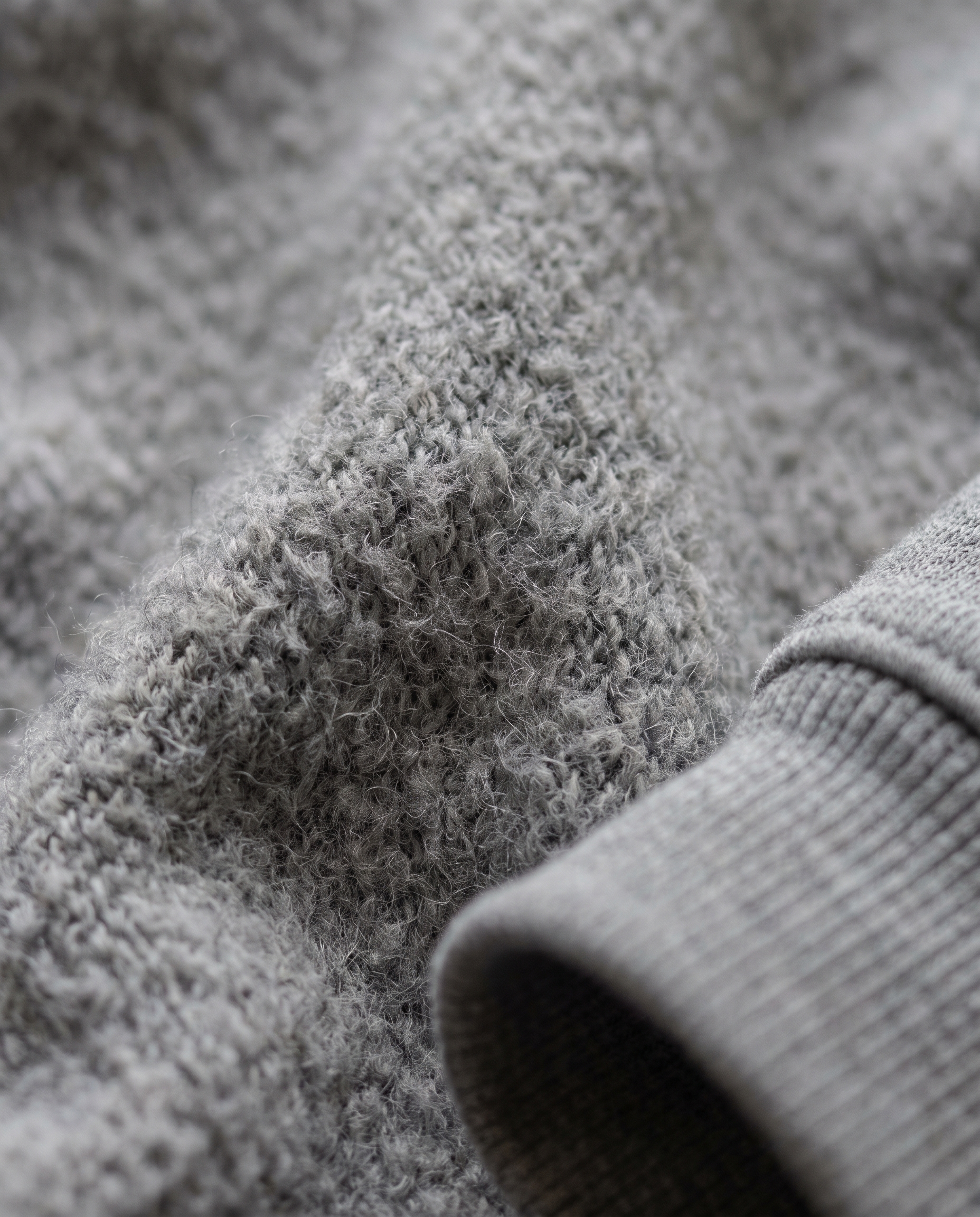
Fabric weight is measured in grams per square metre. A square metre of our sweatshort fleece weighs 380 grams. A square metre of the crewneck and hoodie fleece weighs 450. A square metre of the tee jersey weighs 280. Those three numbers explain most of what the clothes feel like.
For reference: a standard promotional t-shirt is between 150 and 180gsm. A supermarket hoodie is usually 280 to 300gsm, and a large share of that figure is polyester, which is lighter per unit of volume than cotton and inflates the perceived thickness. At 450gsm in 100% cotton, our fleece is roughly one and a half times the mass of a typical hoodie and it is all cotton, which is why it takes four hours to dry flat and why we tell you not to tumble it.
Weight on its own is not quality. A heavy fabric knit loosely is a bad fabric — it will grow at the elbow, bag at the hem, and pill within a season. What matters is weight in combination with yarn count, twist, and knit density. Our fleece is knit from a ring-spun, medium-twist yarn at a tight gauge, which is slower on the machine and produces less fabric per hour. That is the real cost difference, and it is most of why a crewneck is $145 rather than $60.
The back of the fleece is brushed. Brushing lifts the loop and cuts it, which makes the inside soft and also removes a small amount of the fabric's structural integrity — you are, physically, shaving the material. A fleece that is over-brushed feels extraordinary in the shop and is thin by the fifteenth wash. Ours goes through the brushing roller twice, not five times. It is less immediately soft than it could be. It is still the same garment in two years.
The 380gsm on the sweatshort is a deliberate step down from the 450. A short has less surface area holding it on the body, so the same weight that hangs correctly on a crewneck drags at the waistband on a short and pulls the elastic down through the day. Three hundred and eighty grams is the point where the leg still falls straight and the waistband stays where you put it.
Garment washing comes after assembly, not before. The finished piece goes into an industrial washer with softening agents and comes out with most of its shrinkage already taken. Cotton fleece will shrink somewhere between five and seven percent untreated. We take four to five percent of that out in the wash so the size you buy is the size you keep. Expect a further one percent in the first home wash, mostly in the length.
All of it is knit and cut and sewn in northern Portugal, near Guimarães, in a factory that has run circular knitting machines since the 1980s. We use one mill for the fleece and one for the jersey. Neither is exclusive to us and we would not claim otherwise; they run other labels' fabric on the same machines, in different yarns, at different densities.
None of this is proprietary. Any brand can order 450gsm brushed-back fleece from a Portuguese mill. Most do not, because it costs more per metre, sews slower, ships heavier, and photographs almost identically to a 320gsm fabric. The difference is in the hand, and the hand only exists in person. That is a genuinely bad thing to sell online, and we are doing it anyway.


